
We Don't Need More Wellbeing Tips
For some of us, the holidays have already begun. For others, there's still one more week to navigate before we can properly switch off. Either way, this time of year often creates space for reflection.
-
What have I done well this term?
-
What has drained my energy?
-
And what do I need moving forward?
For the past few months, you may have heard me talking about how teacher wellbeing continues to evolve.
Why does that matter?
Because here we are at the end of another term and some of us are running on empty. Some of us are wondering where the last ten weeks went. And many of us are asking the same question we've asked before:
"Why am I still so exhausted?"
It's certainly not because we don't know enough about wellbeing.
Most educators can tell you exactly what supports wellbeing. We know the importance of sleep, movement, boundaries, connection and taking breaks.
The problem isn't a lack of knowledge. The problem is that while wellbeing advice has remained largely the same, the profession has changed dramatically.
Teaching today is more complex than it was five years ago. The pace is faster, the emotional load is heavier and the uncertainty is greater.
The problem with our wellbeing conversations is that we are trying to navigate today's challenges with yesterday's wellbeing conversation.
For years, educator wellbeing has focused on self-care, resilience and stress management. These approaches matter, but they are no longer enough on their own.
Research tells us that wellbeing is influenced not only by how we recover from stress, but also by our ability to adapt, build supportive relationships, navigate challenges and find meaning in our work.
It’s not about knowledge it’s about application in a complex world.
That's where wellbeing intelligence comes in.
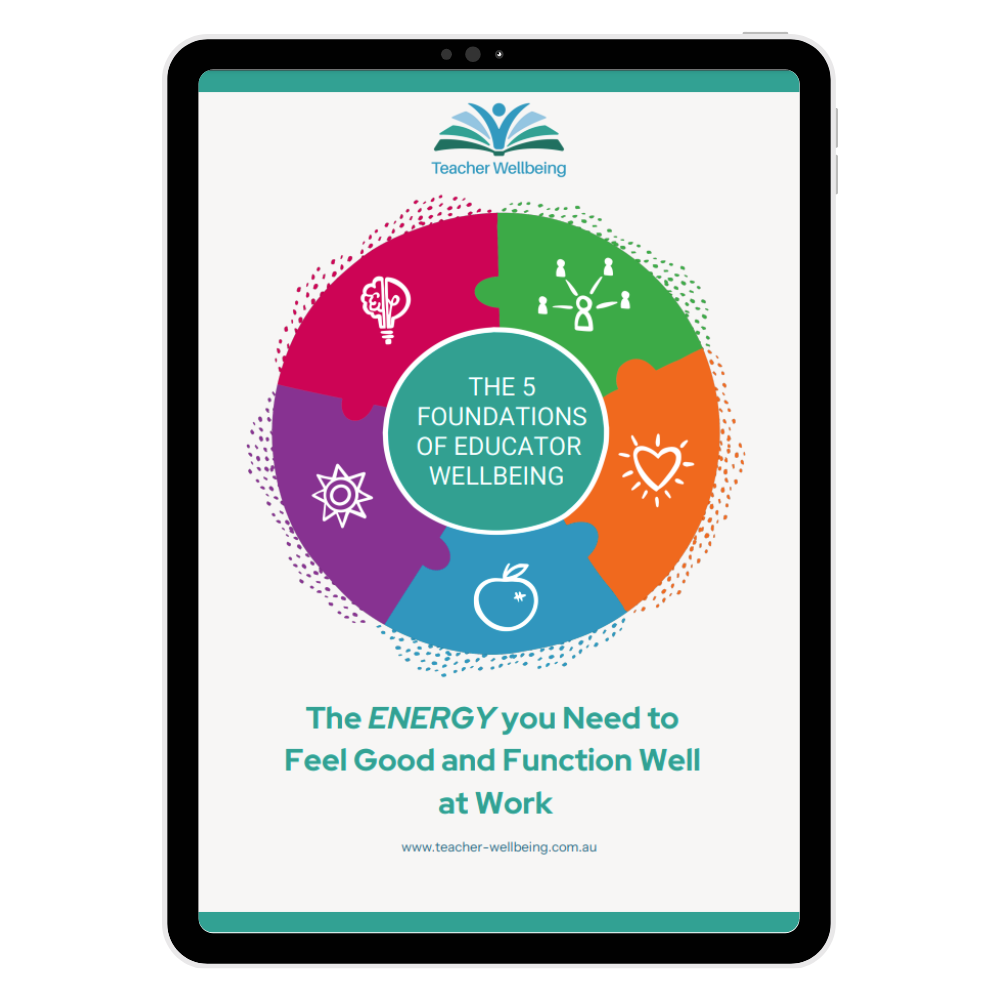
Wellbeing intelligence is the ability to understand ourselves, manage our emotions, adapt to change, build healthy relationships and make choices that support sustainable wellbeing.
In other words, it's not just about wellbeing knowledge and posters. It's about developing the skills that help us navigate an increasingly complex profession with greater awareness, confidence and intention.
One Small Shift
This week, pause and ask yourself, What am I noticing right now?
-
Notice your thinking - What story am I telling myself?
-
Notice your body - What is my energy telling me?
-
Notice your choices - What small decision am I making in this moment?
Wellbeing intelligence begins with awareness. When we notice our thoughts, emotions and behaviours, we create space to choose rather than simply react.
These small moments of awareness influence our Mindset, shape our Mood, and strengthen our sense of Mattering – the foundations of wellbeing intelligence.
Because awareness creates choice, and choice creates change. Because knowledge doesn't create change. Application does.