
Wellbeing Science Has Evolved and This is Why
Over the last couple of weeks, I’ve been sharing with you why a new era of teacher wellbeing is upon us that I’m calling Teacher Wellbeing 2.0.
Today, I want to share with you why this shift has occurred.
In short, the science of wellbeing has moved on.
You see, as educators, we are incredibly well-versed in educational psychology.
We understand how students learn. We know how to build relationships, create safe environments, support emotional regulation, and differentiate for need…. It’s our bread and butter.
But when it comes to adult wellbeing in workplaces, we’re actually in a different field altogether.
That’s the domain of organisational psychology.
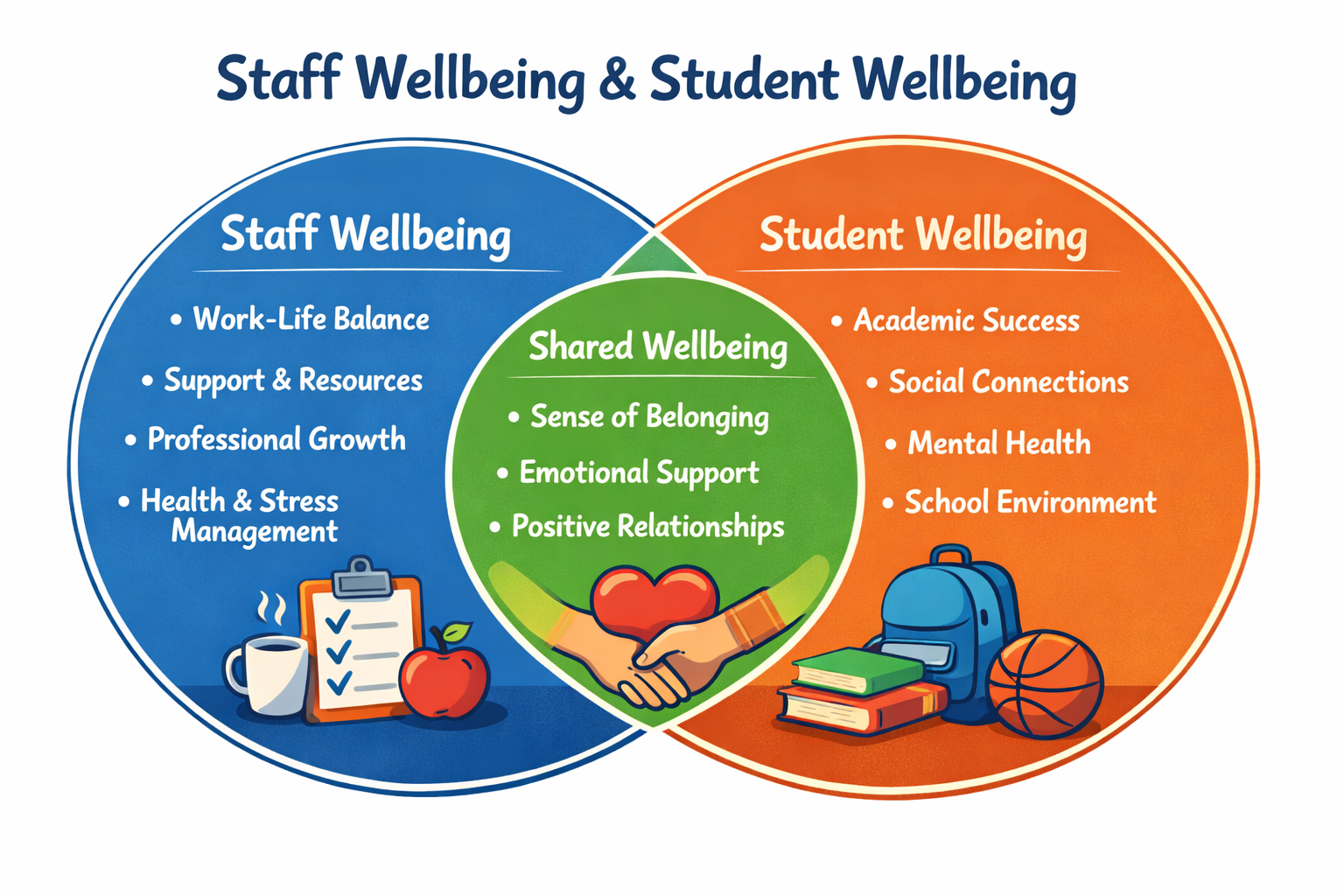
And this is where the gap has been sitting.
Because for a long time, we’ve taken what we know about supporting students… and tried to apply it to ourselves as professionals working inside complex organisations.
It makes sense that we did that. It’s what we know. But the research tells us it’s not enough on its own because workplaces operate differently.
Workplaces are shaped by systems, leadership, expectations, communication patterns, and how work is designed and distributed.
And that’s why the conversation is shifting. Not away from Positive Psychology, but beyond it.
When we look at wellbeing through an organisational lens, we start to understand something important:
What drives how people feel at work isn’t just mindset or skill (although these things matter). It’s whether their basic psychological needs are being supported within the environment they’re working in.
This is where Self-Determination Theory gives us a really practical anchor.
At work, people need to feel:
-
A sense of autonomy — that their voice matters and they have some control over how they do their work.
-
A sense of competence — that they can do their job well and are supported to grow.
-
A sense of connection — that they feel part of something and valued within it.
When those needs are supported, people tend to feel more engaged, more motivated, and more energised.
When they’re not, the same work can feel heavier than it should.
And this is where that idea of energy starts to make even more sense.
Because what drains us isn’t always the workload itself. It’s the experience of working in an environment where those needs aren’t consistently met.
It’s being in conversations where your voice isn’t really part of the decision.
It’s navigating unclear priorities that make it hard to feel effective.
It’s working in isolation when the work itself is anything but simple.
That’s where the science of organisational psychology sits.
This is how we understand ‘Psychosocial Hazards’ – the psychological harm caused by workplace design, ie workplace stress.
The question shifts from:
“How do we get everyone onboard with our staff wellbeing policy?” to
“How do we build a workplace where people enjoy coming to work and do their job well?”
In the schools I work with, this is often a turning point.
When people begin to understand the science of workplace wellbeing – what it is and what it isn’t - it changes the conversation (and stops the finger-pointing).
It becomes less about blaming people and more about strengthening our workplace conditions.
Not perfectly. But intentionally.
As you head into your week, consider this:
What do you know about the science of workplace wellbeing?
If you want to know more, simply email us at [email protected] and we’ll send you a short article.
Next week, I’m going to build on this and talk about why self-care, on its own, can’t carry this — and what schools are doing differently when they start to take a more sustainable, whole-school approach.