
What if Building a Positive School Culture Was Easier Than You Thought?
As I've been writing these emails over the past few weeks, you may have noticed that they all seem to come back to the same conversation.
We've talked about the ripple effect we have on one another. We've explored relational energy, communication and the importance of being curious instead of jumping to conclusions. On the surface they might seem like different topics, but I don't really think they are.
I think they're all pointing to one simple idea.
The way we work together shapes the way we experience work.
The longer I've worked in schools, the less I believe culture is something that just happens because you've got a great bunch of people. I've worked with incredible people over the years, and even then, misunderstandings happened. Expectations weren't always clear. Good intentions occasionally landed the wrong way. We all assumed we were reading from the same page, only to discover later that some of us weren't even in the same chapter.
I've certainly been guilty of that.
There have been plenty of times when I've walked out of a meeting thinking, Well, everyone knows what we're doing now, only to discover a week later that we'd all left with slightly different versions of the same conversation. Nobody was trying to make life difficult. We'd simply filled in the gaps differently.
The reality is good people don't automatically create healthy cultures.
Healthy cultures are built when good people take the time to talk about HOW they're going to work together.
That's why one of the first things we focus on in the Sustainable Staff Wellbeing Program isn't wellbeing at all. It's shared expectations.
Not another document to sit on a shared drive collecting digital dust, but genuine conversations about what working well together actually looks like.
-
How do we communicate when we're under pressure?
-
What do we do when we disagree?
-
How do we give feedback in a way that helps someone grow instead of putting them on the defensive?
-
How do we check for understanding before assumptions take over?
They sound like ordinary questions, but I've come to believe they're some of the most important conversations a team can have.
Because every unanswered assumption has a habit of becoming tomorrow's frustration.
When expectations stay unspoken, people spend an enormous amount of energy trying to interpret one another. They wonder what was meant, whether they've done the right thing or whether they've missed something important. It's exhausting, and most of that exhaustion has nothing to do with workload. It comes from the uncertainty of trying to work out the unwritten rules.
Imagine how much easier work feels when those rules don’t have to be guessed.
When people know what’s expected of them and what they can expect from one another, they have more energy for the work that actually matters. Conversations become clearer. Relationships become stronger. Trust grows because people aren’t constantly trying to read between the lines.
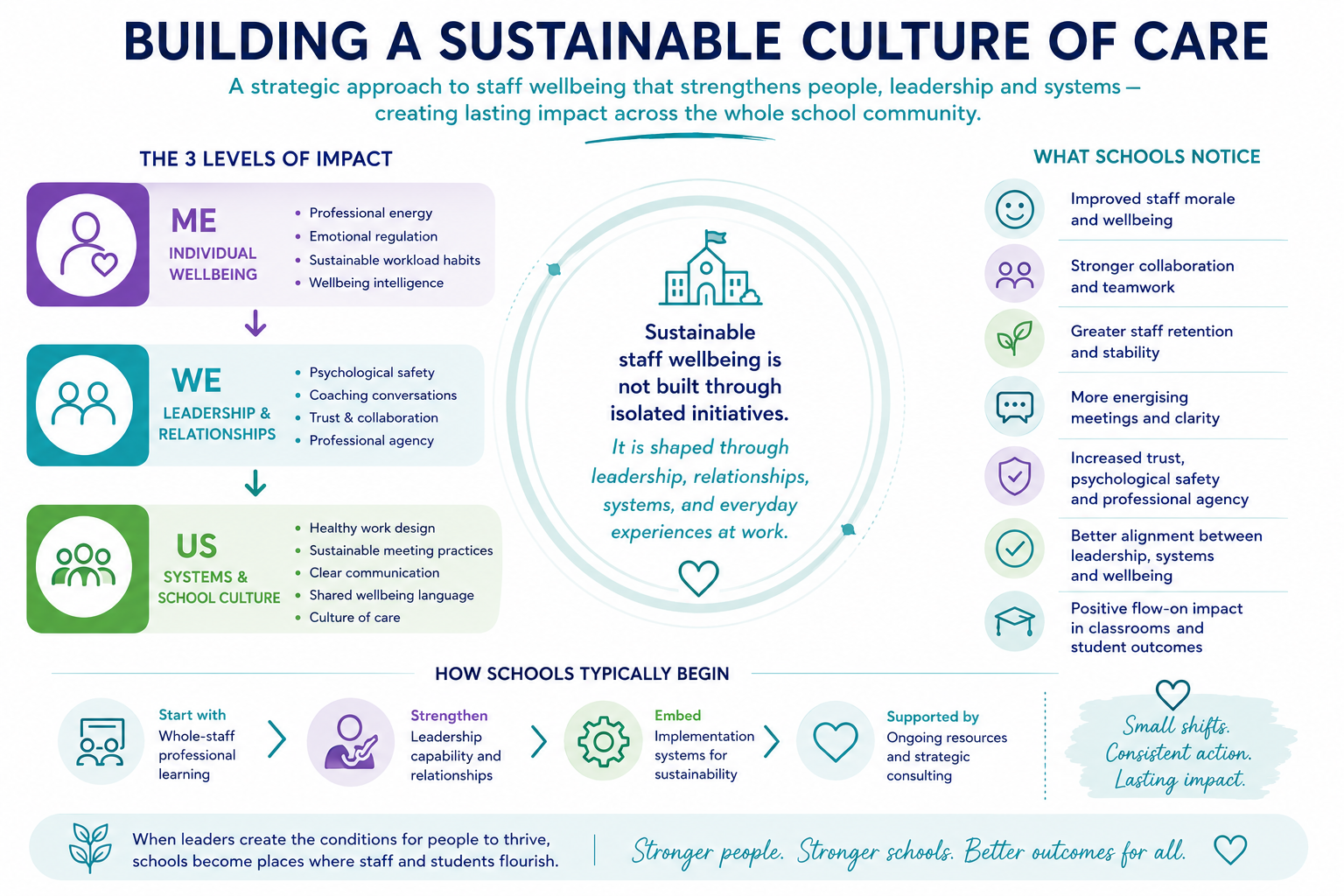
For me, that’s what sustainable staff wellbeing has always been about.
Not adding another wellbeing initiative to an already crowded calendar, but creating workplaces where people can do their best work because the way they work together supports them instead of draining them.
If there’s one thing I hope you’ve taken away from this series this month, it's that wellbeing isn't something we chase after once everything else is finished.
It's created in the middle of the everyday moments;
-
In the conversations we have.
-
The assumptions we clarify.
-
The respect we show.
-
The way we choose to lead, communicate and work alongside one another.
None of those things are particularly flashy. But together, they change what it's actually like to come to work every day.
One Small Shift
As you head into the week, ask yourself—or even your team—this question:
"What's one thing we all assume everyone knows, but we've never actually talked about?"
You might be surprised by the conversation it starts.