
What is ‘Wellbeing Intelligence’ and Why Does it Matter?
When we talk about educator wellbeing, the conversation often focuses on what schools need to do better.
And rightly so. Workload matters. Leadership matters. Culture matters. Psychological safety matters.
The conditions we work in shape how we feel, function, and flourish at work.
That's exactly why the Sustainable Staff Wellbeing System focuses so strongly on creating healthier workplace conditions and sustainable organisational change. Because schools have a responsibility to create environments where people can thrive, not simply survive.
But there is another important truth we don't talk about enough.
Even in the best workplace, challenges still exist.
There will always be change to navigate, difficult conversations to have, setbacks to face, and moments when our confidence, energy, or motivation wavers.
And while systems influence our wellbeing, they don't completely determine it.
This is where Wellbeing Intelligence comes in.
Wellbeing Intelligence is our ability to understand, protect, and intentionally influence our wellbeing, especially during times of challenge, uncertainty, and change.
It is the capacity to notice what is happening within us, understand what we need, and respond in ways that support our long-term wellbeing rather than deplete it.
In many ways, it is one of the most important capabilities educators can develop for a sustainable career.
Because when we strengthen our Wellbeing Intelligence, we become better equipped to navigate complexity without losing ourselves in the process.
This is the foundation of everything we do inside the Reignite Room.
While the Sustainable Staff Wellbeing System focuses on creating healthier workplaces, the Reignite Room focuses on strengthening the human being within the workplace.
Together, they work hand in hand.
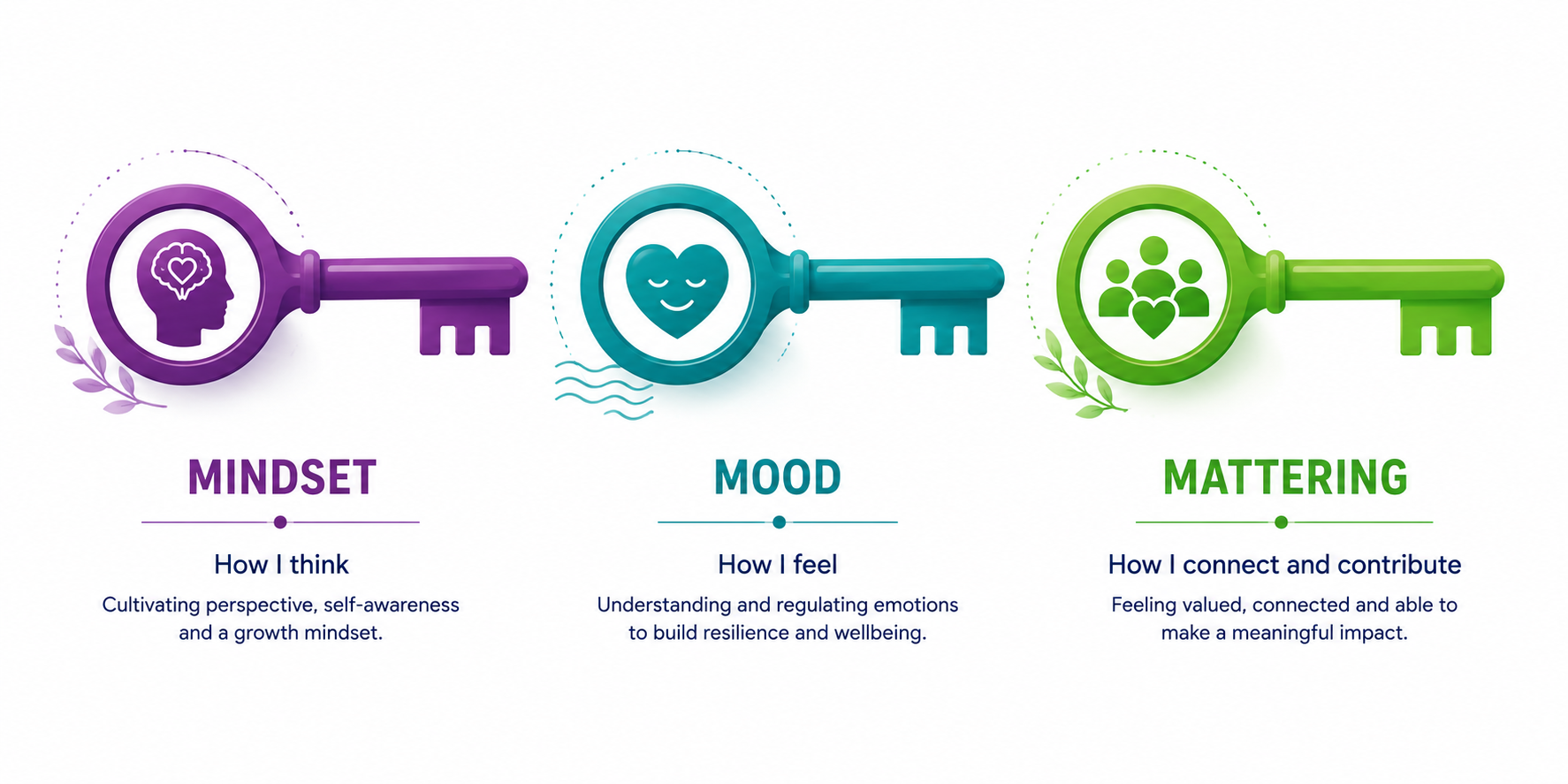
Inside the Reignite Room, we help educators develop their Wellbeing Intelligence through three powerful foundations:
-
Mindset – understanding how our thoughts, beliefs, and thinking patterns shape our experience.
-
Mood – recognising how emotions influence our energy, decision-making, relationships, and wellbeing.
-
Mattering – reconnecting with purpose, value, contribution, and the human need to feel seen and significant.
Drawing on Positive Psychology, Cognitive Behavioural Therapy, and coaching science, these foundations help educators develop the awareness, skills, and confidence to thrive in a profession that often asks so much of them.
Not because educators should simply "cope better" while unhealthy systems remain unchanged.
But because while we continue advocating for healthier systems, we also deserve practical tools that help us protect our wellbeing, strengthen our resilience, and reconnect with hope.
That is the power of Wellbeing Intelligence. And it is at the heart of the Reignite Room.
Doors normally open for short periods of time but because this is so important I’m opening the doors permanently so you can join at any time.
Stay for one month, 6 months or a lifetime – it's up to you.
Doors open in July, and I'd love to welcome you inside.
One Small Shift
This week, notice a moment when you feel stuck, overwhelmed, or powerless.
Pause and ask yourself:
"What is within my influence right now?"
Sometimes the smallest shift in perspective is where wellbeing begins.
See you soon.