
Who Needs More Time?
What if staff wellbeing isn't just about finding more time?
It's Term 4. Assessments are piling up, reports need writing, end-of-year events are filling the calendar, and somewhere in amongst all of that, there's still the everyday business of teaching.
And if you're anything like most teachers I know, you're probably thinking, "I just need more time!"
That’s fair enough too, because sometimes you really do.
We need more time to plan, more time to mark, more time to have those important conversations and perhaps just a little breathing space to get through the week!
But here's something I've been thinking about lately.
What if improving staff wellbeing isn't always about finding more time, but about changing the conversations we're having?
Because let's face it, schools aren't becoming less complex.
Student needs are increasing. Expectations keep changing. Administrative demands aren't disappearing. And just when you think you've got everything sorted, something else comes along.
We can't always control these demands, and we certainly can't create more hours in the day. But we can get better at navigating them together.
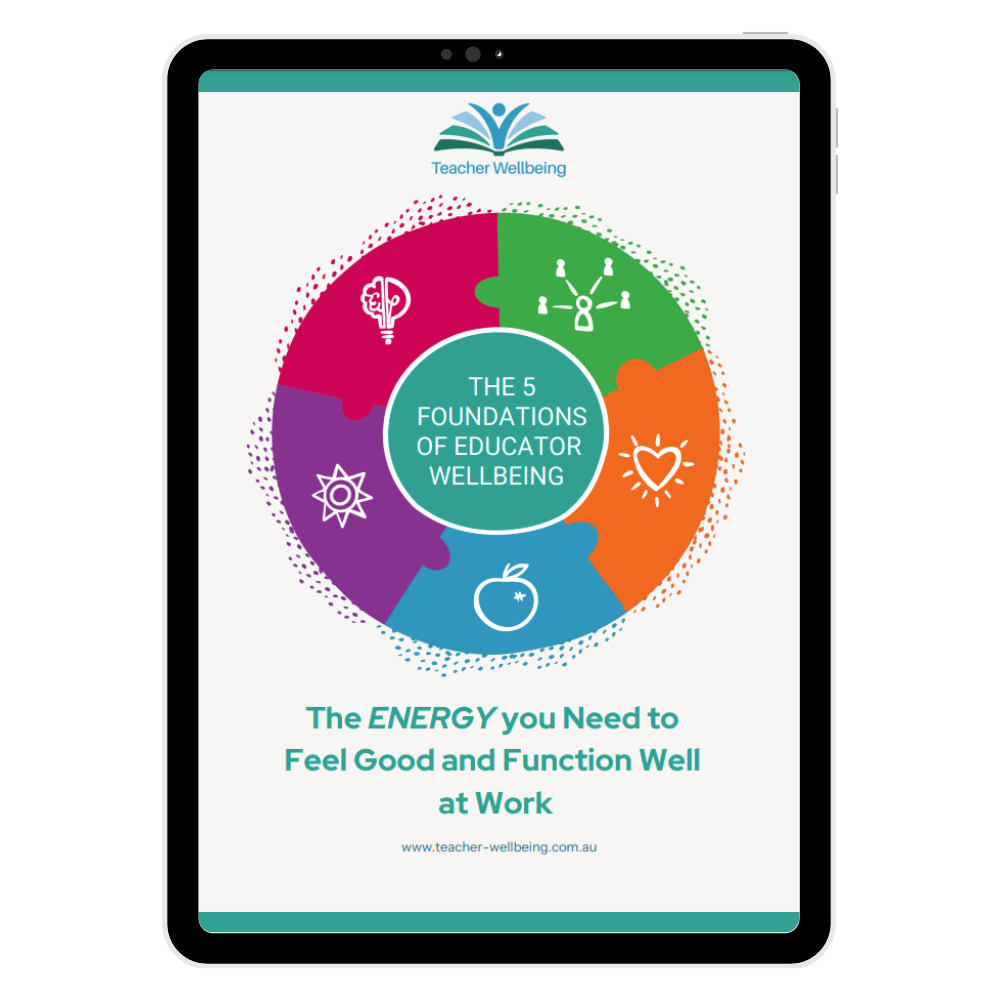
And one of the simplest ways to do this is through shared language.
Over the past ten years of working with schools, I've seen what happens when people have a common way to talk about the challenges they're experiencing.
Instead of saying, "We're overwhelmed", we can ask, "What demands are increasing, and what resources do we need?"
Instead of saying, "Communication here is terrible", we can ask, "Where do we need greater clarity?"
Instead of saying, "Nobody listens here", we can ask, "Where could staff have more influence over decisions?"
Same challenges yet it’s a different conversation. And those conversations open up possibilities that frustration alone often doesn't.
This isn't just a nice idea. Research from organisational psychology, particularly the Job Demands–Resources model (Bakker & Demerouti, 2007), shows us how workplace demands and resources influence our wellbeing.
This is further supported by Amy Edmondson's (1999) research on psychological safety which reminds us how important it is for people to feel safe to speak up, ask questions and share ideas.
When we have a shared language, we give people a way to talk about their experiences without blaming, complaining or feeling like they're the problem.
And here's the best bit. Shared language doesn't need another meeting or another wellbeing initiative.
It can become part of the conversations we're already having.
In the staffroom. At faculty meetings. In leadership discussions. During planning conversations. Even in those quick corridor chats between classes.
Of course, language alone won't fix an unrealistic workload. Schools still need to address the conditions creating unnecessary pressure.
But shared language helps us move beyond talking about how busy we are, towards understanding what's creating the pressure and what we might actually do about it.
And right now, when everyone is trying to get through the final stretch of the year, this can be a powerful shift.
So here's a little question to ponder as you navigate the Term 4 chaos:
What's one conversation you could have this week that might make work a little easier for yourself or someone around you?
Research behind the thinking:
-
Bakker, A. B., & Demerouti, E. (2007). The Job Demands–Resources model: State of the art.
-
Edmondson, A. (1999). Psychological safety and learning behavior in work teams