
Heard of Psychosocial Harzards - What Are They?
There’s a term that’s been popping up more and more in education lately.
Psychosocial hazards.
Chances are, you’ve heard it, and if you haven’t, you will.
In a meeting.
In a policy document.
Maybe in passing during a professional learning session.
And if you’re like most educators I speak to, there’s often a quiet response to it:
“I’ve heard of it, but I’m not completely sure what I’m suppose to do.”
So let’s unpack it. Because if you are serious about teacher wellbeing, this is it.
Let’s start with the fact that psychosocial hazards are a well-established area in workplace health and safety, it’s still relatively new in education. And like many new things, it can feel a bit complex at first.
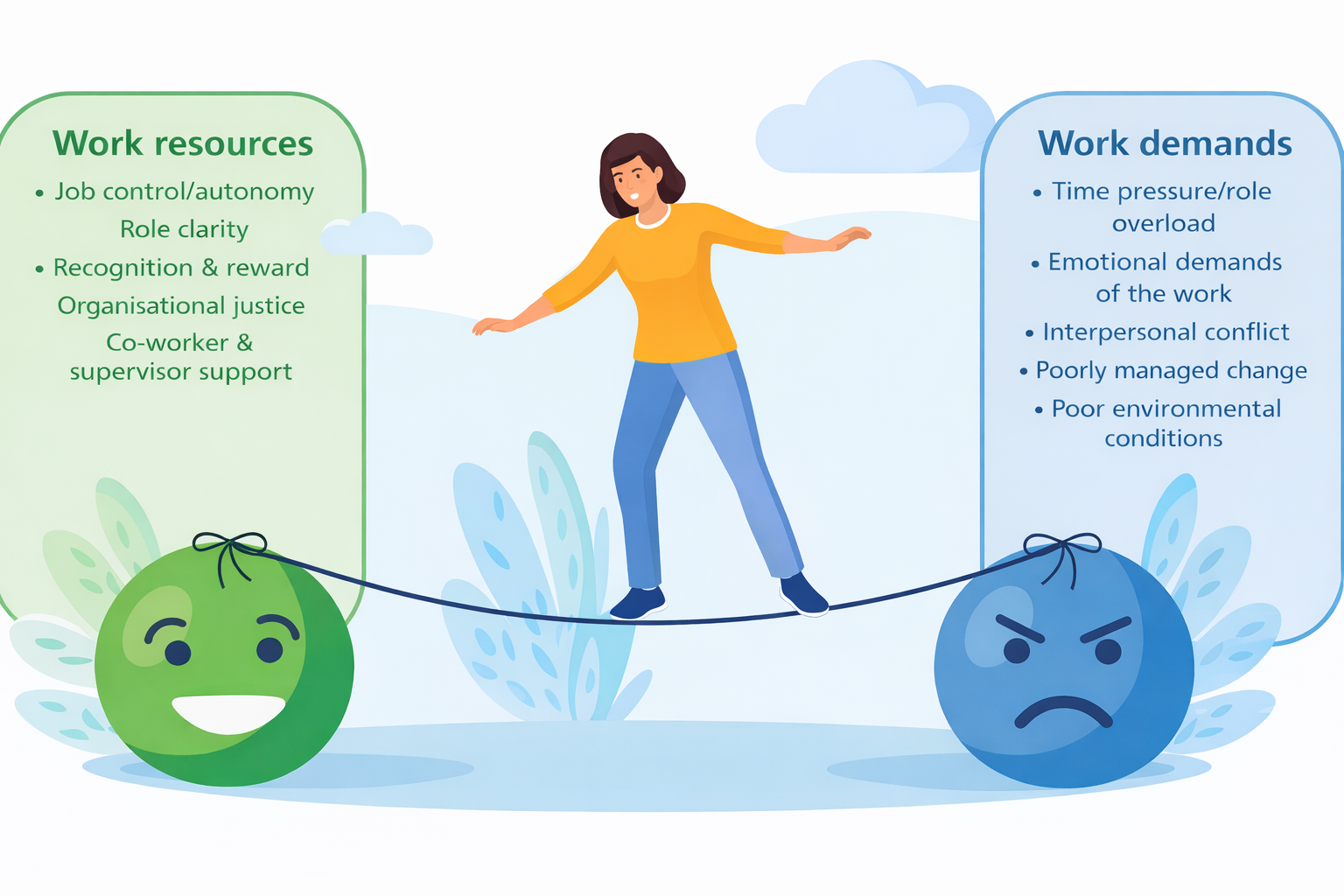
At its core, psychosocial hazards are aspects of work that have the potential to cause psychological harm to its employees.
Not because people aren’t capable, but because of how the work is designed, led, and experienced.
Psychosocial demands include things like:
-
Unmanageable workload.
-
Unclear or constantly shifting expectations.
-
Limited support or recognition.
-
Poor communication.
-
Workplace conflict or low psychological safety.
None of this is new to schools.
What is new is how we’re being asked to think about it.
Organisations like Safe Work Australia, alongside broader Workplace Health and Safety (WHS) frameworks, have changed in the past few years. Workplaces now have clear guidelines about their responsibilities.
This does not mean it negates our personal responsibility for our own self-care, it means we have the science, language and tools to support people at work in meaningful ways that go beyond standard wellbeing initiatives.
That’s a significant shift. Because it moves wellbeing from something personal…to something shared.
Yes, individuals still play a role in how they manage their energy and respond to challenges. But leaders and organisations also have a responsibility to ensure that the conditions of work are not causing harm.
This is why what we used to do doesn’t work anymore. Wellbeing is not about quick fixes or one-off solutions. It’s about building awareness of where these hazards exist, and then taking practical steps to reduce their impact through:
-
Clearer expectations.
-
Stronger communication.
-
Better alignment of workload and priorities.
-
More supportive ways of working together.
It’s not about removing the complexity of the job but making it more sustainable to do.
Once we start to understand psychosocial hazards, we stop normalising old patterns of how we used to get things done and move into the future of how we want to get things done.
As you move through your week, I’d invite you to notice this:
- How clear of your role descriptions?
- What formal processes exist for recognising good work (beyond the global thankyou email)?
- How effective are staff meetings at communicating expectations and why they exist?
Next week, I’ll build on this and show how schools are starting to respond — not with more initiatives, but with more intentional, system-wide approaches.